Context is king
Marie Antoinette, a Cold War spy bar, Sardinian granite, and what Jeremy Scott taught me

Yesterday was one of those days that reminded me why I live here.
It started with a sound bath in West London at 8:25AM, which Karl is evangelical about and which I enjoyed … just fine. I am a faithful student of Vibali in Berlin so the bar has been set, but fine.
The real event of the day was visiting the Marie Antoinette exhibition at the V&A, which is extraordinary and everyone should go immediately. It is sold out, but if you are a V&A member you can still go and considering the Schiaparelli exhibition opens next month, you might as well. At the Antoinette exhibit it is wow moments lleft and right: incredible textiles, interesting sound design, the expected sparkly diamonds, some truly unhinged French political cartoons about a woman they were in the process of executing for the crime of, among other things, dressing too well. There are Galliano gowns that will make you want to lie down on the floor.
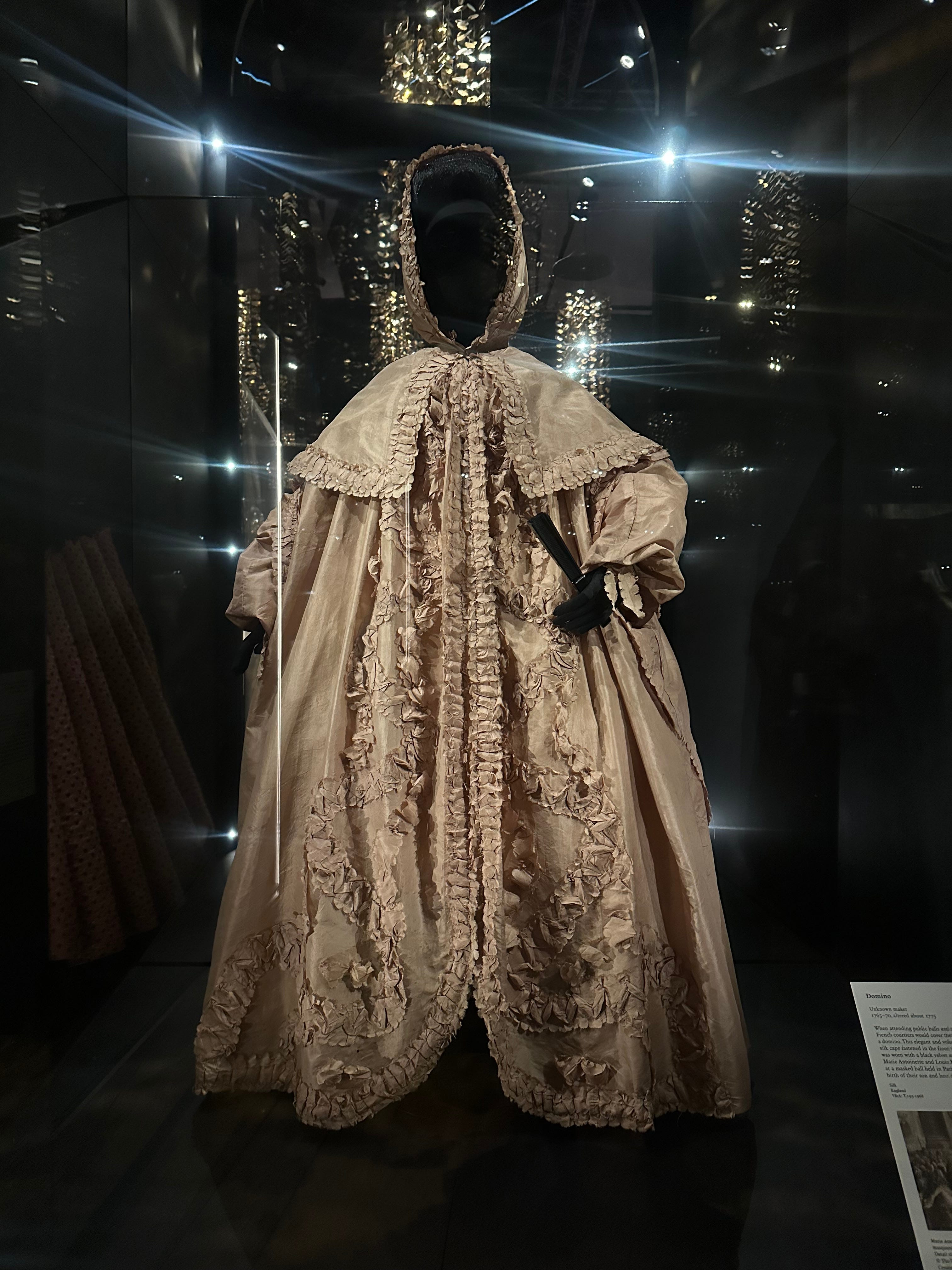
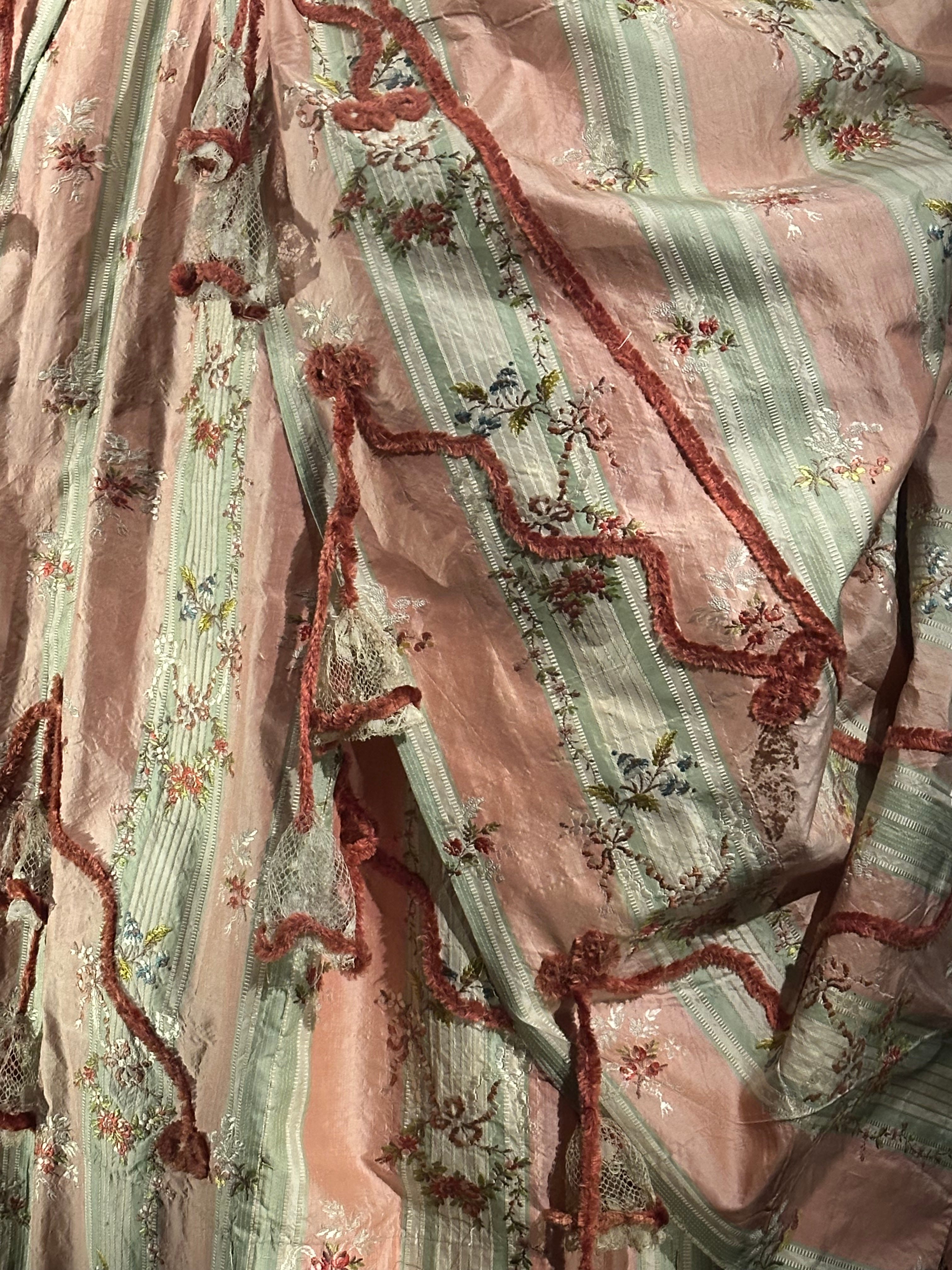
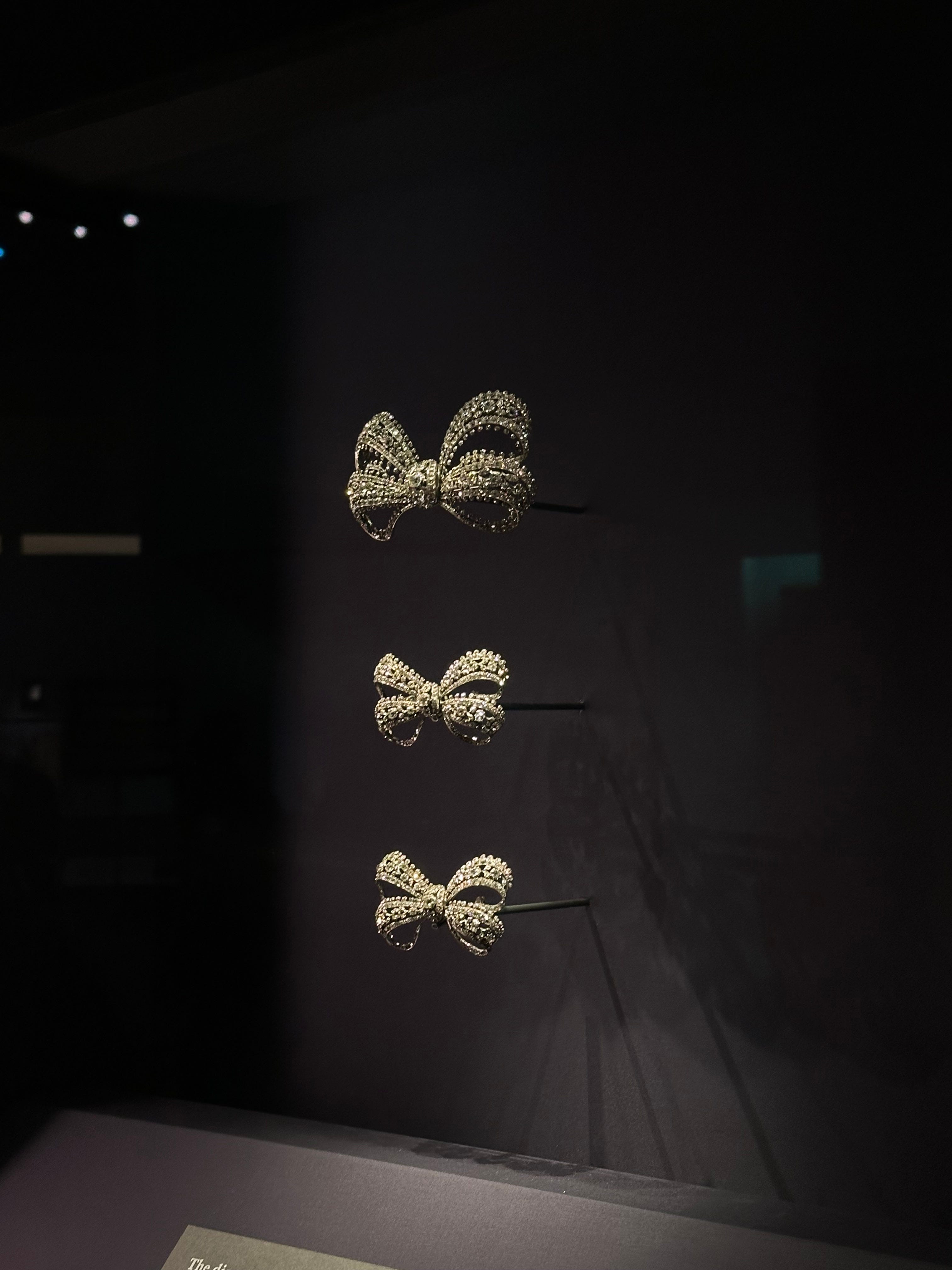
The thing that really stopped me was the Jeremy Scott pieces — not one look but several, and a Galliano piece that, removed from this context, I would have found kind of abhorrent if I’m being honest.
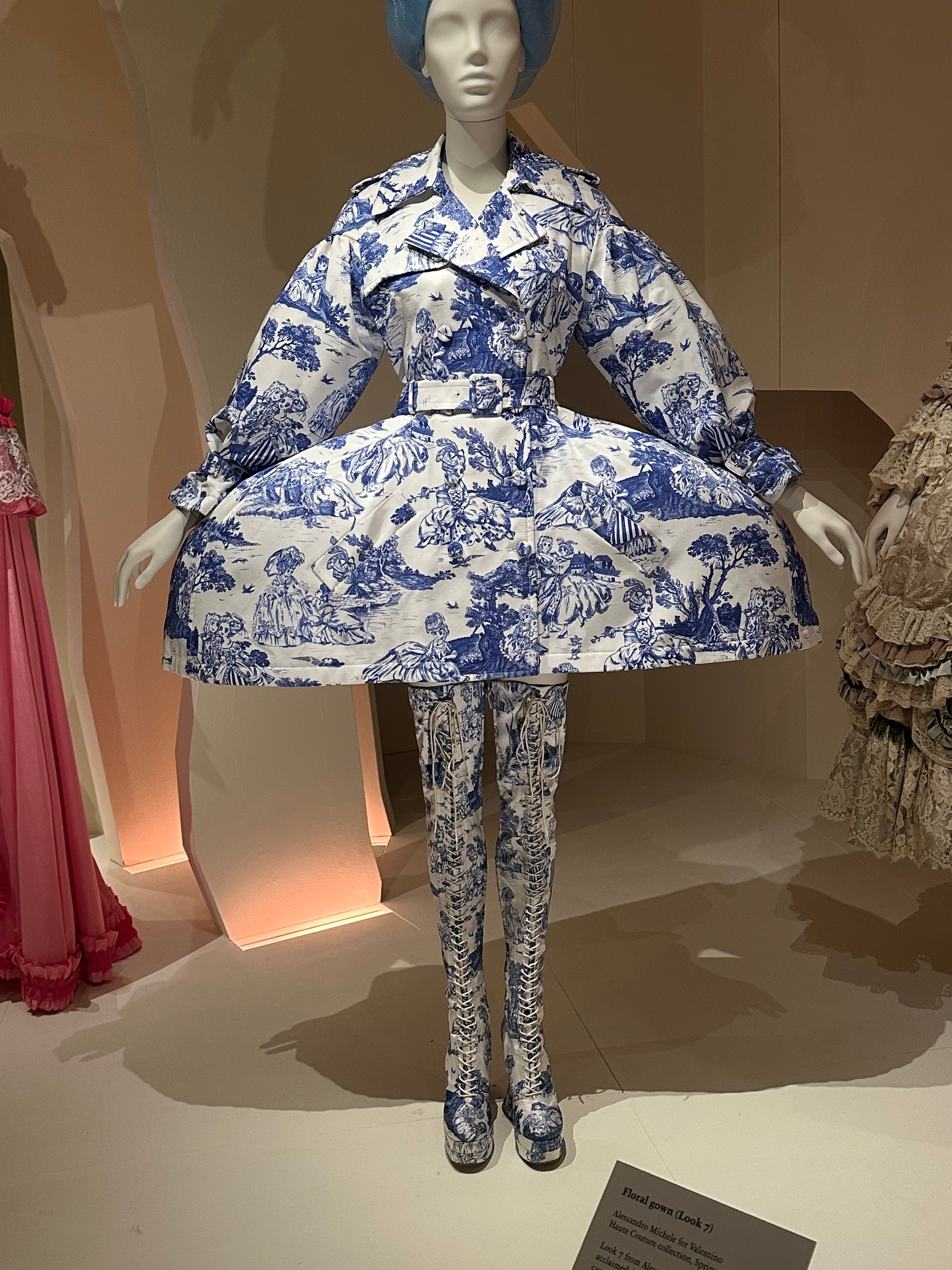
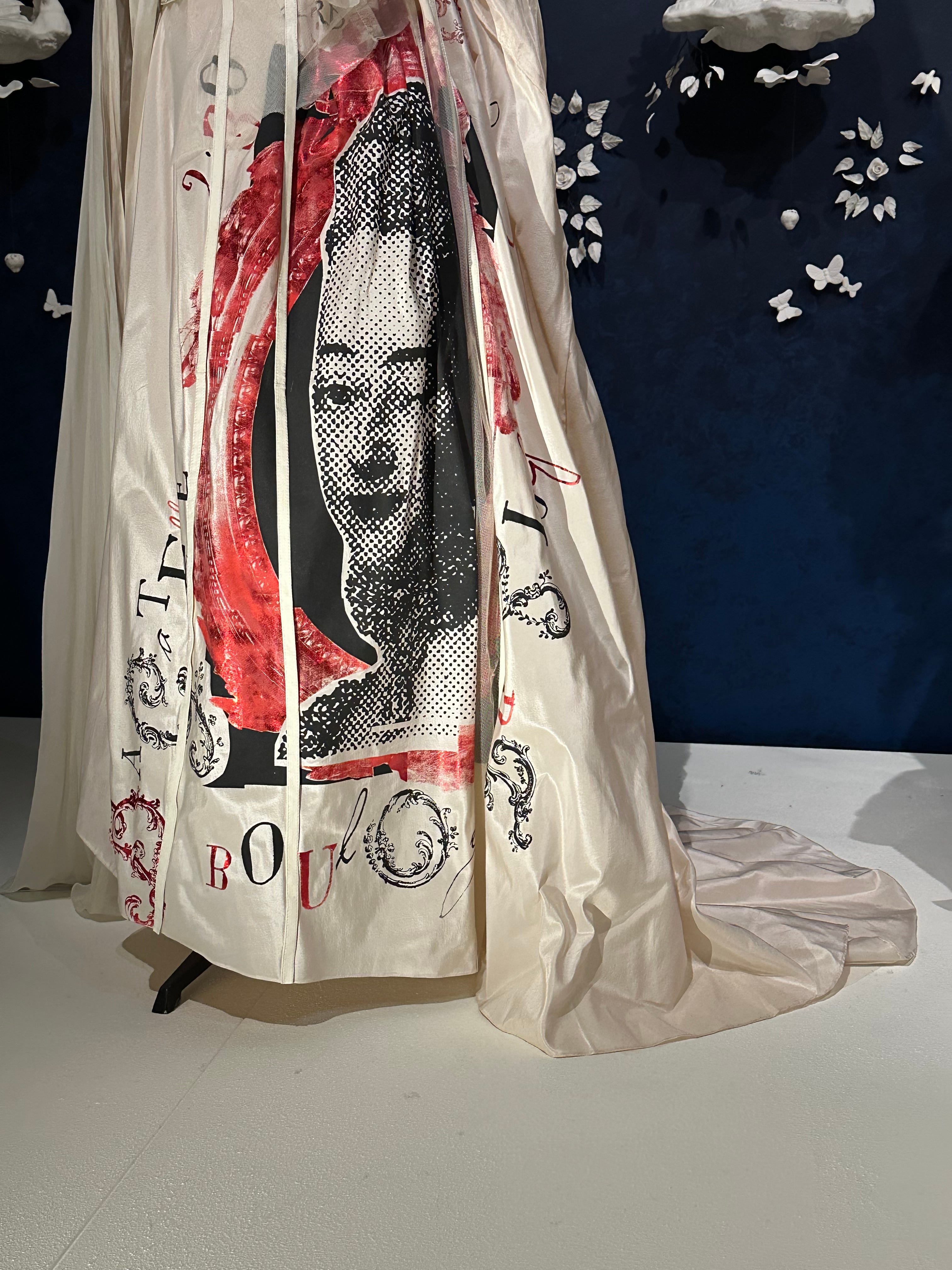
And that’s the thing. I have extremely strong opinions about what I do and don’t like, which I have always considered a virtue, but standing in that room I had to acknowledge that I have been writing things off without considering them in context. The exhibition put these pieces in genuine conversation with eighteenth century excess, with the politics of spectacle, and suddenly the maximalism wasn’t noise, it was argument. The only logical conclusion. This was a humbling reminder to not just walk around with horse blinders on, only seeing that which fits my scope of ‘good,’ despite it being year of the horse.
We’ve built lives where we can curate an almost perfect bubble, only fed what our taste profile has pre-approved, never ambushed by something that doesn’t fit. It’s comfortable and it quietly atrophies the part of your brain that knows how to contextualize. The V&A does context. Lots of institutions do context. Most of the internet doesn’t bother.
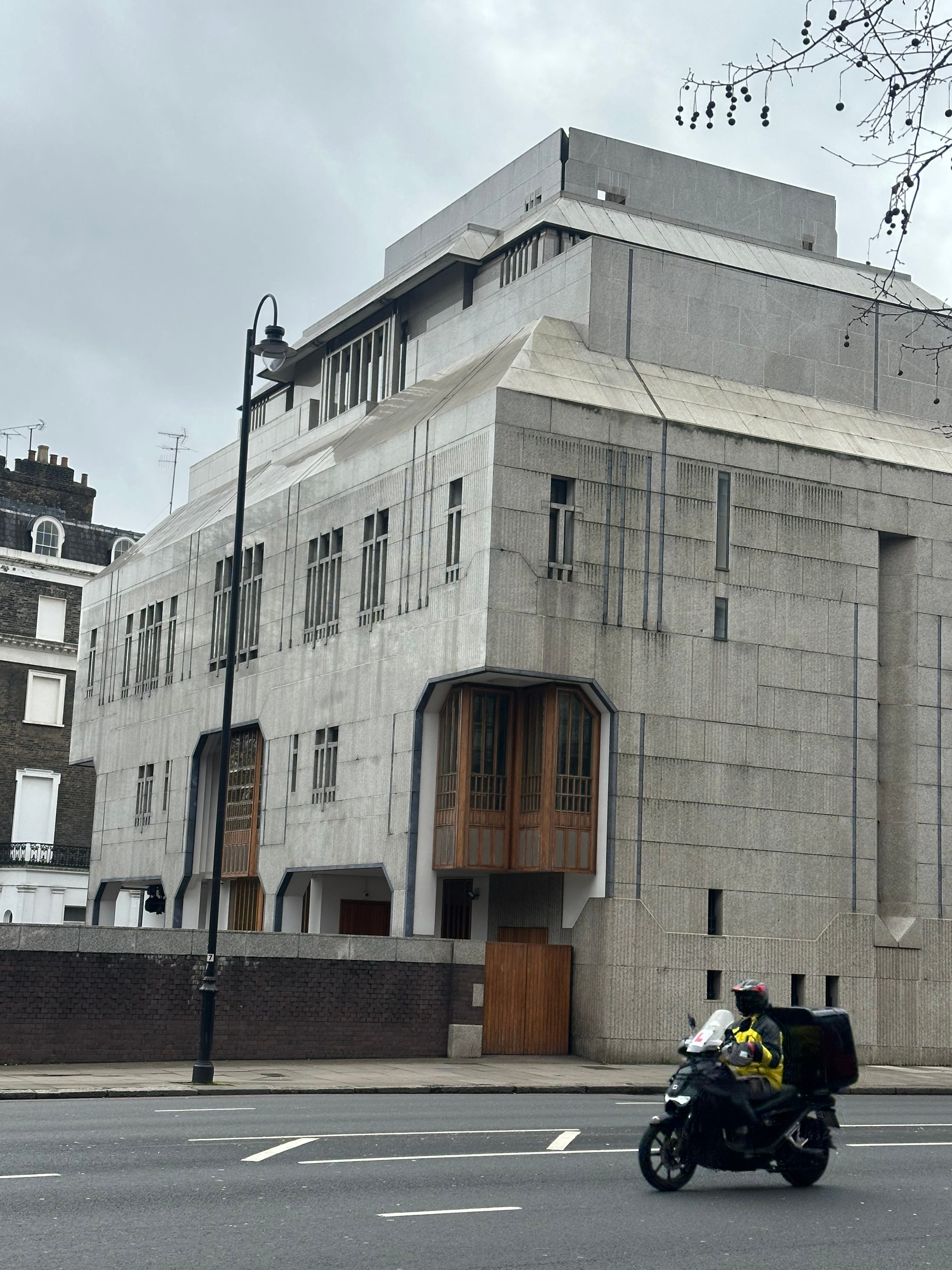
After the Marie Antoinette rooms we drifted through the Japanese ceramics section — I’ve been going to pottery classes recently (one love to County Hall Pottery) and it’s changed what I notice in ways I didn’t anticipate, highly recommend acquiring a new craft purely for how it rewires your eye and forces you to stop emailing for several hours on every week.
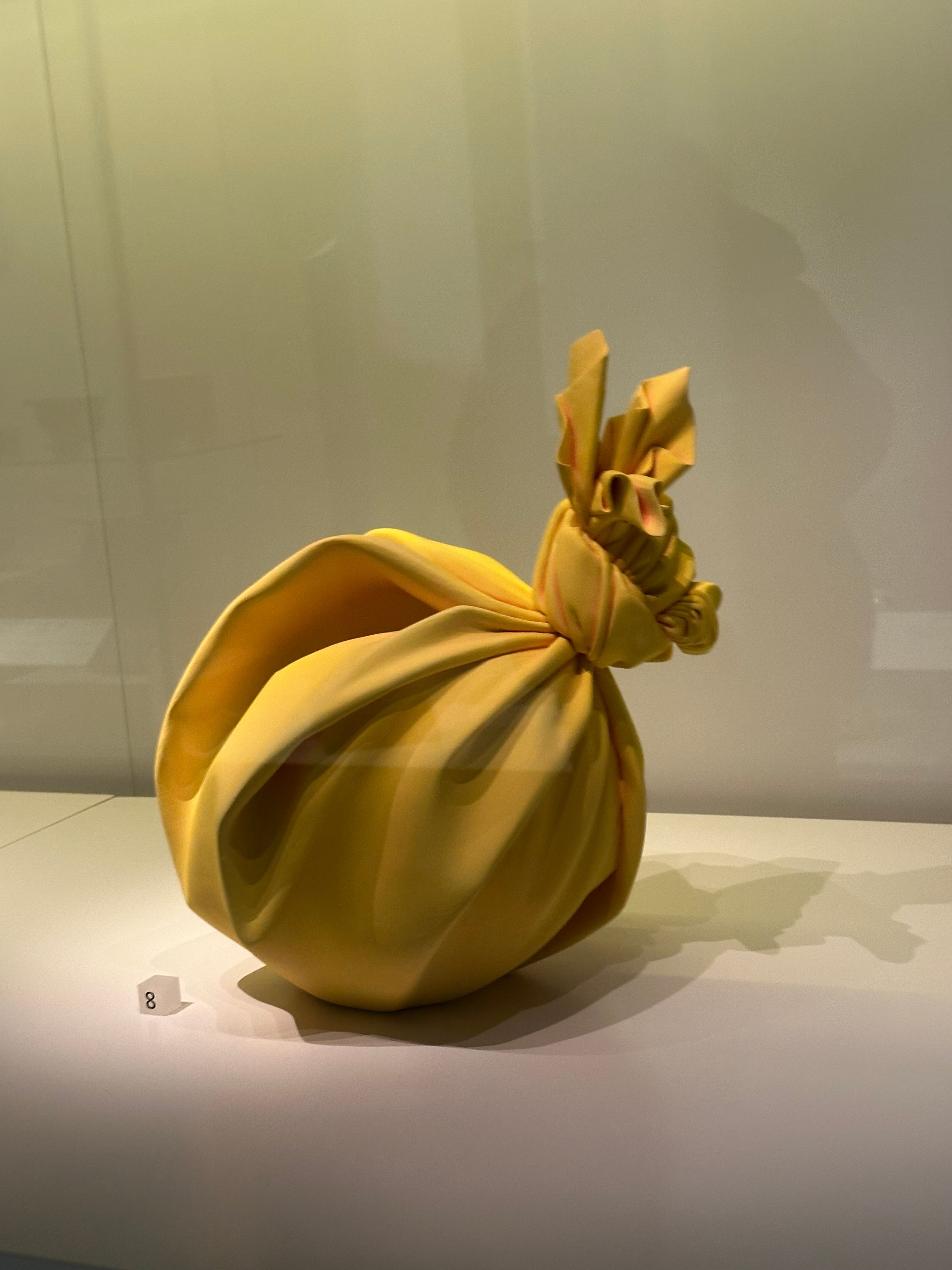
When we popped out the front door of V&A, absolutely stopped dead in front of the Ismaili Centre on Cromwell Road. If you haven’t properly looked at this building, look up. It’s a 1985 modernist Islamic cultural centre sitting directly opposite the V&A, strong and quiet in Sardinian granite and Burmese teak with Pentelikon marble from Greece — materials from everywhere, fused into something that reads as distinctly its own thing. The architect was Hugh Casson, which is an interesting casting choice if you know him: the man who designed the interiors of the Royal Yacht Britannia, president of the Royal Academy, close personal friend of the Queen, deeply establishment British — commissioned to build the first Ismaili centre ever constructed in the Western world under Margaret Thatcher’s ever-watchful eye. The brief was essentially: be compatible with your Victorian neighbours without pretending to be one of them. It won Private Eye magazine’s award for worst new building of the year in 1982, which I find both delightful and completely wrong. As an American from the West Coast where the oldest building in town is maybe a Victorian someone added a garage to in 1994, London architecture does something to me on a regular basis. Five centuries of style on one block and nobody makes a fuss.
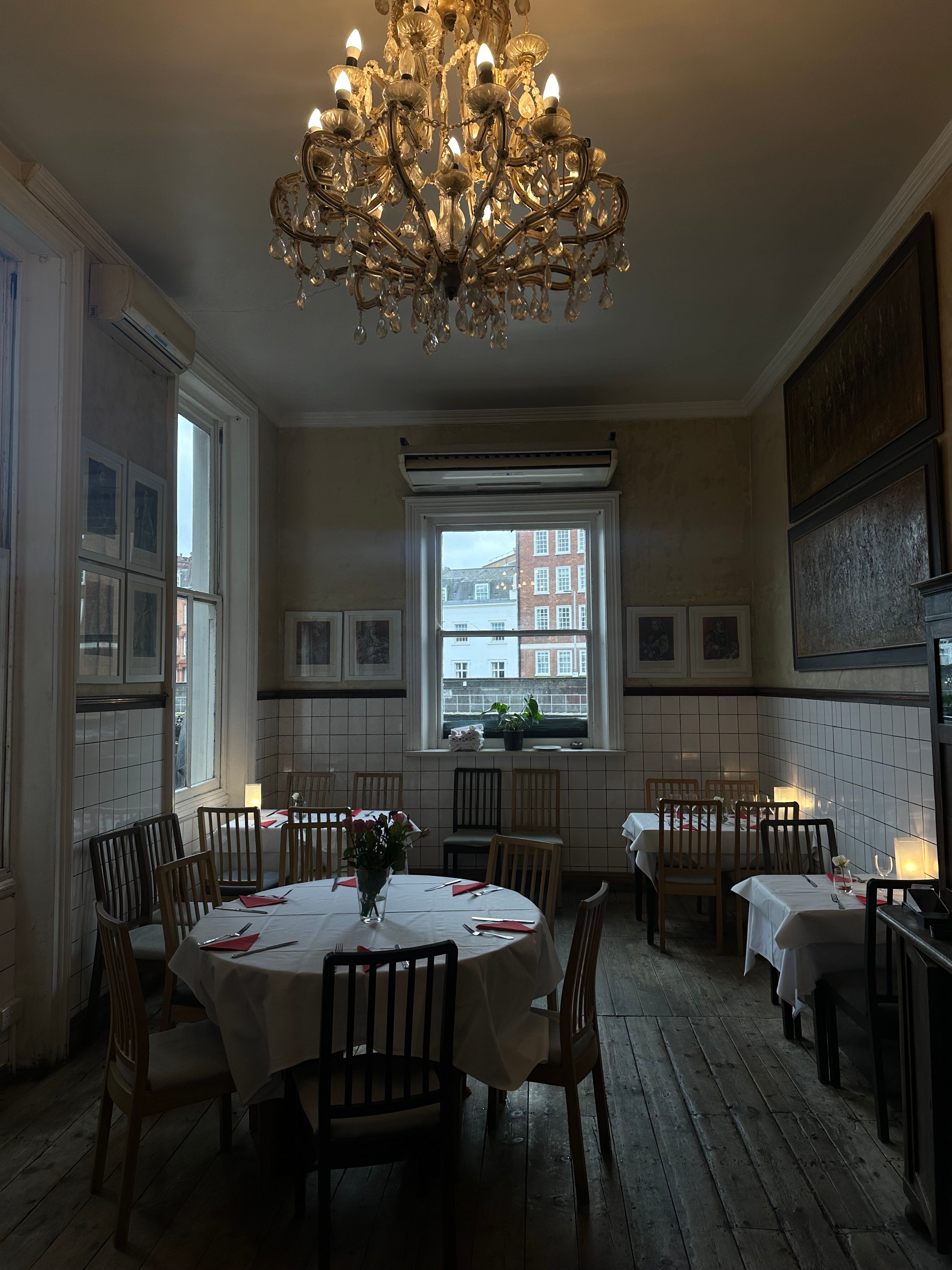
Starved from so much beauty, we ended at Daquise on Thurloe Street, a Polish cafe that has been there since 1947, which we immediately declared our new favorite lunch spot in London. It started as a wartime canteen for Polish officers. The name is a portmanteau of the founder Dakowski and his French wife Louise (unbearably romantic) and became, in its heyday, a proper Cold War institution. Roman Polanski ate dumplings there daily while filming Repulsion around the corner. Christine Keeler used to meet her KGB contact there during the Profumo affair. The Polish president-in-exile apparently ran his campaigns to overthrow Soviet power from a corner booth here in the 80s. Wooden floors, classical music on a genuinely good sound system, art on the walls that is strange in the best way. We had meat dumplings, marinated herring, mysterious stuffed eggs, and a chicken soup I am still thinking about. At the end of our meal, our server shared that they are closing in August because TFL is taking over the building. Heartbreak.
So: go there. Order the chicken soup. Go before August.